
Some of the hardest sites to build on in New York just got easier to pencil.
Volley Automation’s robotic parking systems have been selected for two Manhattan residential projects: 38 Gramercy Park East and 550 West 21st Street in West Chelsea. Both are ground-up condominium developments by Legion Investment Group, and both are currently under construction.
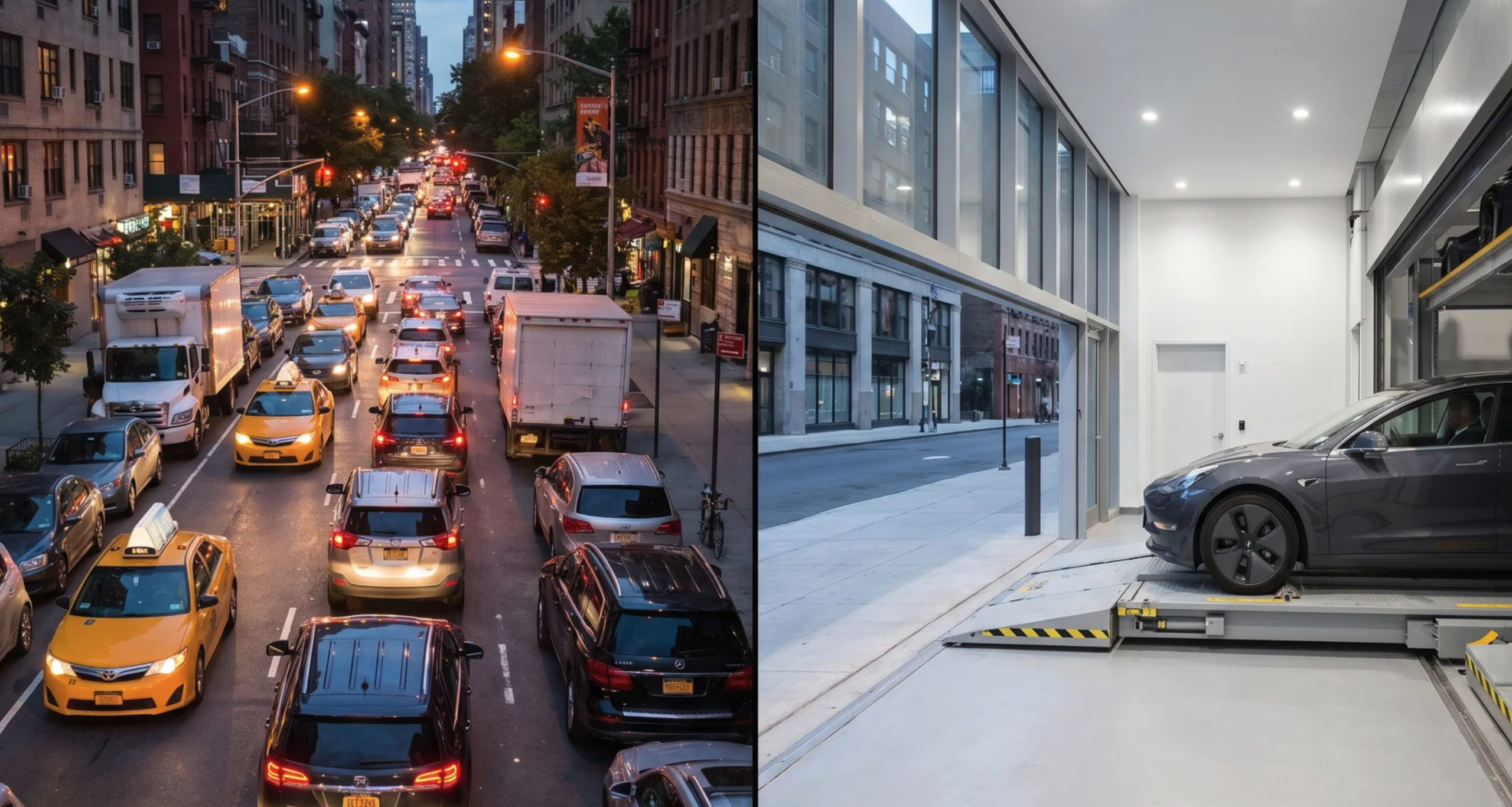
These are exactly the kinds of sites where conventional parking breaks the math. Dense, high-value, architecturally ambitious lots in the middle of Manhattan, where every square foot of drive aisle, turning radius, and ramp is square footage that can’t be sold, and where deep below-grade excavation runs into cost, time, and the water table. On sites like these, standard parking can make a project unbuildable.
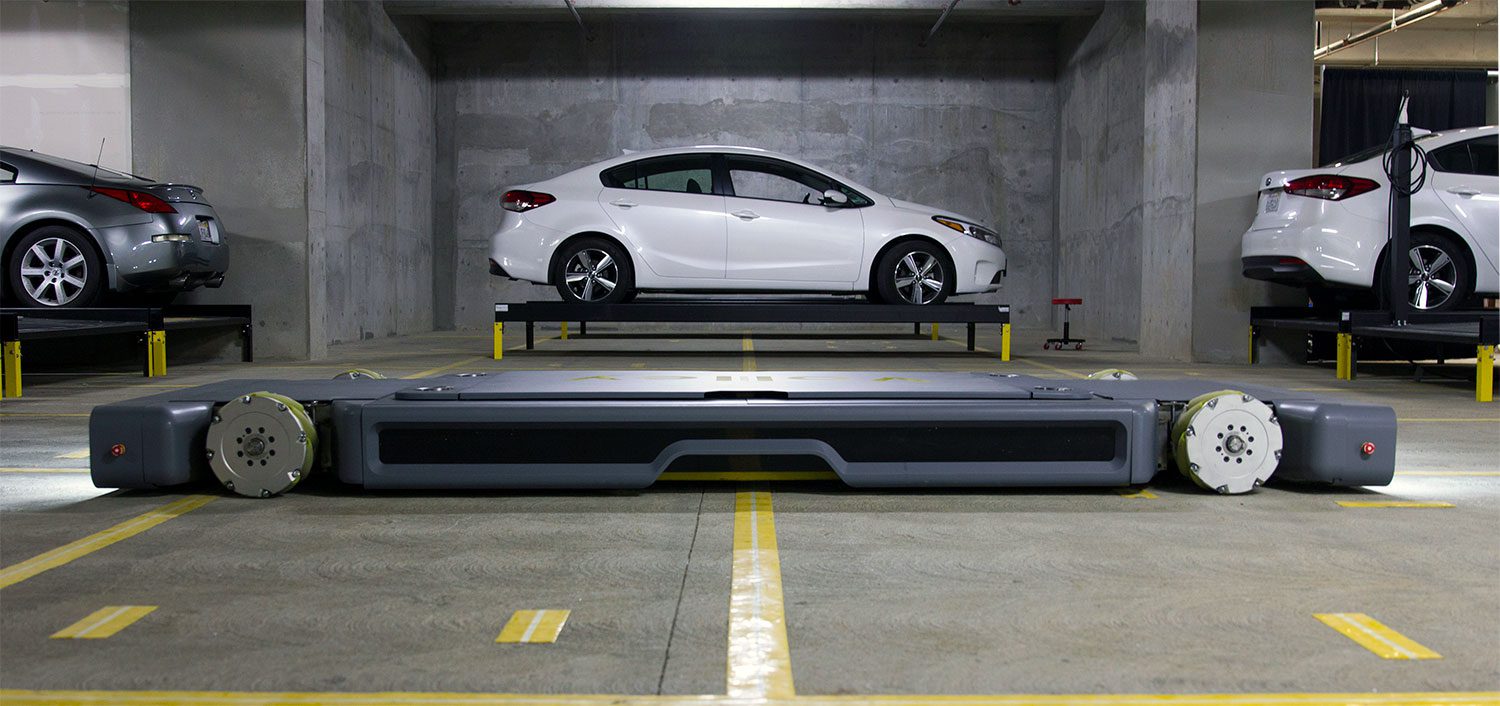
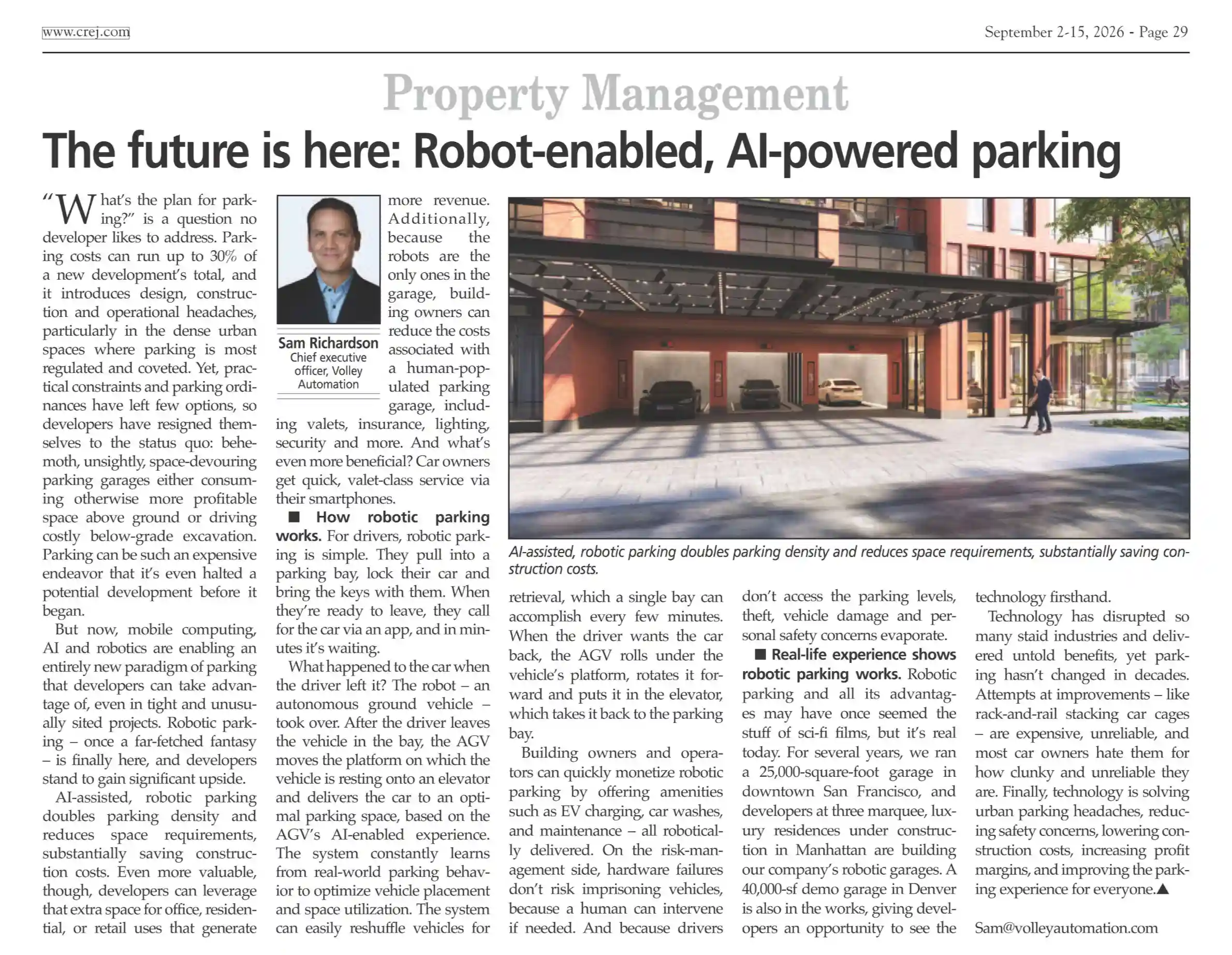
These projects are a perfect match for Volley. Volley’s automated guided vehicles (AGVs) and proprietary AI-enabled software store and retrieve cars robotically. There are no drivers circling for a spot, no ramps, no oversized aisles. By removing those requirements, a Volley garage delivers up to 2x the parking capacity of a conventional structure in the same footprint, or the same capacity in far less space.
For a developer, that difference shows up where it matters most: on the pro forma. Reclaiming square footage and excavation depth from parking means more buildable area for residential space, better-proportioned floor plans, and the ability to build more substantially on lots that would otherwise be dimensionally constrained.
The advantages Legion is designing around are the same ones available to any developer or owner working a tight urban site:
- Greater density. Up to 2x more parking capacity by eliminating drive aisles, turning radii, and ramp structures.
- Lower construction complexity and environmental impact. Smaller, more efficient structures need less concrete, less steel, and less excavation, cutting both construction cost and embodied carbon.
- More architectural freedom. When parking no longer dictates the shape of the core or podium, architects gain real room to optimize the design above.
“Legion is demonstrating how innovation can solve difficult challenges, leading to better outcomes for the buildings’ residents, and the city overall,” said Nick Broz, Chief Sales Officer at Volley Automation. “Instead of treating parking as a necessary evil, smart developers like Legion see it as a design opportunity and amenity.”
That framing matters in a city where parking keeps getting scarcer and more expensive. Volley’s approach relieves that pressure at the building level by adding capacity without fines, fees, or added regulatory friction, and all while giving residents a faster, safer, valet-quality experience (but without the valet).
The Legion projects join a growing national pipeline. The company recently relocated its headquarters from South San Francisco to Denver, where it opened a 35,000-square-foot robotics research, testing, and demonstration facility to support its accelerating deployment across the country.
For developers, architects, and owners staring at a site where the parking simply doesn’t fit, Manhattan is now proof of what’s possible. Two of the most challenging lots in the city are getting built, all because the garage got smarter.